Forex Trading Journal Guide: The Exact Way To Track Your Trades And Improve Results
- 325,000+ members from all over the world
- Become a profitable trader with TFXC
- Enjoy all of our services 100% free of charge

"Incredible journey. The signals are accurate and highly effective. Over the initial three days, my account balance surged by 21%."
 Join Our Free GroupIt’s 100% FREE

"Fantastic for beginners, the support team and community are always ready to help and eager to collaborate. Great for learning and improving strategies weekly."

 3 - 8 Daily Trading Signals






Douwe 39
The Netherlands
 4 months
  30 min. a day
Bradley 23
United Kingdom
1 week 20 min. a day 
Nicole 33
Germany
4 weeks 40 min. a day 
Jordan 44
United Kingdom
3 months 40 min. a day Join Our Free GroupIt’s 100% FREE

We believe everyone should have the chance to succeed in trading, regardless of their location or financial situation.
This is why we’ve partnered with some of the largest trading platforms. They’re willing to cover our expenses if we refer our members to them, allowing us to keep our services 100% free of charge.
These partnerships benefit everyone, and over the past few years, we’ve welcomed over 15.500 members to our channel without charging a penny!



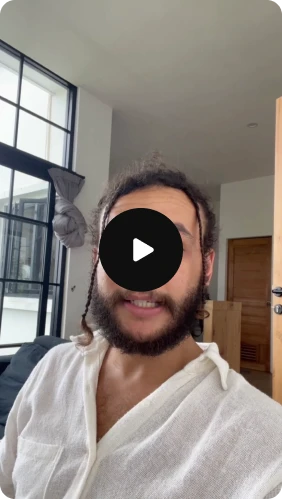

We have a team of professional traders who share their trades daily. In addition, we offer access to educational materials such as e-books, courses, and live trading webinars.
By partnering with some of the largest award-winning trading platforms, we’ve managed to keep our services completely free of charge!
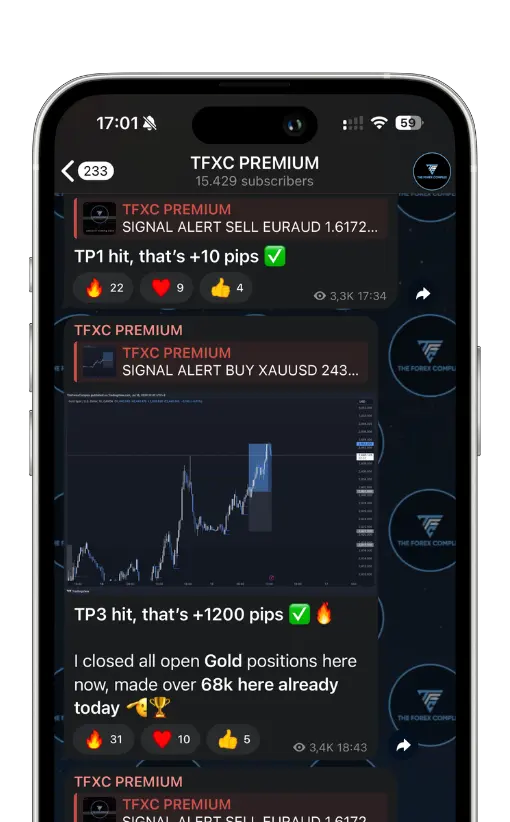
- Copy, paste and profit with our free trading ideas
- Learn from our 10+ hour trading video course
- Interact with thousands of traders worldwide
- Ask our 1 on 1 support team any question
- Trade together during weekly live-streams
- Spend countless of hours behind charts
- Make mistakes which could have been avoided
- Trade without a strategy or trading plan
- Lose thousands before seeing your first profits
- Face all of your challenges alone
Join The Forex Complex today and gain free access to our 10-hour trading course, The Blueprint.
This course offers a step-by-step guide to creating your own strategies and helps you avoid costly mistakes, potentially saving thousands in the process.
With our trading course you will learn to trade without hesitation or doubt, allowing you to thrive as a trader.

- Created in 2021 we now have a community of over 325.000 members worldwide
- We have a team of five traders who share their own trading setups every day
- Together our traders have over 30 years of trading experience combined
- We cover almost every market (Currencies, Commodities, Crypto)
- We aim to help you navigate through the world of Forex by providing you with reliable Forex signals, strategy guidance and risk management tips
- By basing our business model on affiliation, we have managed to keep our services 100% free!
Join Our Free GroupIt’s 100% FREE

Looking for answers?
We’ve written out some of our most Frequently Asked Questions (FAQ)
Join Our Free GroupIt’s 100% FREE
Yes, anyone can trade with our community. It doesn’t matter if you’ve been active in the markets for one day or one year. We’ve made sure that our trades are easy to follow and that our explanations are easy to understand.
We have partnerships with some of the largest, award-winning trading platforms worldwide. In order to access our trading ideas we require traders to use these platforms to trade with. We believe that this model of doing business ultimately benefits everyone the most.
Becoming a member of The Forex Complex will allow you to start taking profitable trades the same day you’ve joined.
We offer a ton of educational material and strongly recommend you to focus on more than just making trades. Using these resources will significantly fasttrack your trading journey and save you a lot of both time and money in the long run!
The Forex markets have a daily turnover of more than 6.6 TRILLION dollars. Even if our community would grow to a million members our combined resources wouldn’t impact the price of the instruments we’re trading much.
Yes, the number one benefit traders experience when they join our community is how much time our trading ideas save them. Instead of struggling hours every day to find consistency in your trading you can use our work to start trading with a proven strategy.
No, we are not financial advisors. Trading forex can be risky and the reward can be great. Because of this it is very important you properly manage your risk and decide whether you want to follow our trades one on one or use them as a part of your trading strategy.
A structured forex trading journal is one of the few habits that can directly change your results, and a FX Notes case study found that journaling increased win rate from 48% to 54% within six months while improving risk‑reward from 1:1.2 to 1:1.6. In this guide we explain how to build and use a forex trading journal that actually improves consistency, risk control, and long‑term returns.
Key Takeaways
| Question | Answer |
|---|---|
| What is a forex trading journal? | A forex trading journal is a structured log where you record every trade, including entry, exit, reasoning, emotions, and outcomes, so you can review and improve your decisions over time. |
| Why do I need a trading journal if I already know strategies? | Strategies only work if you execute them consistently, and a journal exposes when you deviate from your plan, similar to how we discuss discipline and education in our guide to good forex trading courses. |
| What should I record in my forex trading journal? | At minimum record pair, direction, position size, entry, stop loss, take profit, strategy used, trade setup notes, emotional state, and post‑trade review. |
| Can a journal improve my strategy performance? | Yes, journals help you see which strategies work in different conditions, much like evaluating different forex trading strategies over time instead of guessing from a few trades. |
| Does journaling help with risk management? | Consistent tracking makes it easier to compare your typical risk per trade to results and tune your approach, just as you would when learning about long vs short positions. |
| Is journaling useful for beginners? | Yes, beginners benefit the most, because a trading journal turns every trade into a documented lesson in line with the educational approach we take in our getting started guide. |
| How often should I review my journal? | We suggest a quick review weekly and a deeper review monthly or after every 20 to 50 trades, similar to how you might reassess your top trading strategies for the year. |
1. What A Forex Trading Journal Is And Why Most Traders Skip It
A forex trading journal is a detailed record of your trades and the thinking behind them, not just a list of entries and exits. It turns your trading history into structured data you can analyze instead of relying on memory and impressions.
We often see traders focus on new indicators while ignoring journaling, even though a widely cited resource reports that structured journaling can reduce impulsive decisions by up to 40%. Skipping a journal keeps mistakes hidden, which is why many traders repeat the same errors through different market cycles.
Core purposes of a forex trading journal
Your journal exists to answer three questions: what did you do, why did you do it, and what happened. If it does not clearly show these answers for each trade, it is not complete.
We use journals to evaluate strategy performance, risk management, and psychological patterns in a way that trade history from your broker alone cannot provide. Once you have even 50 to 100 trades recorded, patterns usually become obvious.
Benefits you can realistically expect
The main benefits of a forex trading journal fall into four areas. You gain clarity on which setups actually work, you expose risk leaks, you manage emotions better, and you become more consistent.
- Clearer statistics on win rate and average reward to risk
- Proof of whether you follow your own trading plan
- Awareness of emotional triggers that cause bad trades
- A record you can use when refining or replacing strategies
In our experience, a good journal becomes the central tool that connects your education, strategies, and broker execution into one continuous improvement loop. Without it, you are guessing about the real drivers of your results.


2. The Essential Elements To Track In A Forex Trading Journal
Every forex trading journal should capture the same baseline data so results are comparable across trades and time. We recommend keeping your template simple enough to complete in under a minute per trade.
Below are the core fields we ask traders to use when they start.
Minimum data fields per trade
- Date and time of entry and exit
- Currency pair, long or short direction
- Position size and account risk percentage
- Entry price, stop loss, and take profit
- Strategy or setup name
- Market conditions (trend, range, news, session)
- Pre‑trade notes and emotional state
- Exit reason (target hit, stop, manual exit)
- Profit or loss in pips, currency, and R multiple
- Post‑trade comments and lessons
With these basics, you can already calculate win rate, average R, and see behavior patterns that matter. You can add more fields later if you need more granularity.
Example journal structure
| Date | Pair | Direction | Risk % | Entry / SL / TP | Strategy | Result (R) | Notes |
|---|---|---|---|---|---|---|---|
| 2026‑01‑10 | EURUSD | Long | 1% | 1.0950 / 1.0920 / 1.1010 | Breakout | +2.0R | Executed as planned, no major news. |
| 2026‑01‑11 | GBPUSD | Short | 0.5% | 1.2700 / 1.2740 / 1.2620 | Reversal | -1.0R | Entered early before confirmation, felt rushed. |
We encourage you to keep the layout similar whether you use a spreadsheet, notebook, or dedicated software. Consistency is more important than complexity.


3. How To Set Up Your First Forex Trading Journal (Step By Step)
We suggest you start your forex trading journal with tools you already know, such as a spreadsheet or a simple notebook. The priority is building the habit of recording trades every time rather than waiting for the perfect tool.
Once the habit is stable and you want deeper analytics, you can move to specialized software that imports data from your broker accounts.
Step 1: Choose your journaling medium
For most new traders a spreadsheet in Excel, Google Sheets, or similar offers the best balance of structure and flexibility. It allows formulas, filters, and quick stats without any subscription cost.
More advanced traders might prefer dedicated platforms like Edgewonk or Tradervue that offer in‑depth metrics and charts. These tools usually cost money but save time for high‑volume traders.
Step 2: Build your template before placing trades
Set up your columns or notebook sections before you open your first new trade. This reduces friction so logging each trade only requires filling empty cells.
We advise adding basic formulas for R multiples and percentage returns from the start. This way the journal automatically converts profits and losses into a standardized metric.
Step 3: Decide your journaling rules
Write a short journaling rule set, for example that every closed trade must be fully logged within 10 minutes. Consistency beats perfection, so keep your rules realistic.
Include how often you will review the journal and what you will look for, such as top three winning setups or biggest recurring mistakes. These rules turn your journal into a disciplined process instead of an occasional activity.
This infographic highlights the five elements to track in a forex trading journal. Use it to improve trade reviews, risk management, and consistency.
4. Using Your Forex Journal To Improve Trading Strategies
A forex trading journal is not only about recording trades, it is about testing and refining your strategies using actual performance data. We often see big differences between how a strategy looks in theory and how it behaves in live conditions.
Your journal lets you compare strategies side by side, filter by market conditions, and see which setups deserve more focus.
Connect your journal to specific strategies
Every trade should be tagged with the strategy or setup it belongs to, such as trend breakout, pullback entry, or countertrend reversal. This tagging is essential if you want to evaluate the methods discussed in resources like our article on top forex trading strategies.
Over time you will be able to generate statistics per strategy, such as win rate and average R, instead of one blended number for all trades.
Analyze by conditions, not just overall results
We recommend filtering your journal by market type, such as trending versus ranging periods, and by time of day or session. Many strategies perform well only under certain conditions.
For example, a breakout system may work better in London and New York overlap, while failing in the Asian session. Your journal is the only place where you can see that in your own data.
Decide what to scale and what to drop
With enough trades logged per strategy, usually around 50 or more, you can start making decisions about which setups to trade more heavily and which to trade less or stop entirely. The FX Notes case study, for instance, reported that journaling helped the trader drop two underperforming strategies.
By pruning methods that do not justify their risk, you simplify your trading and allow more focus on the patterns that actually pay you.

5. Journaling Trade Types: Long Vs Short, Swing Vs Day Trades
Different trade types behave differently, so your forex trading journal should clearly distinguish them. At a minimum you should separate long and short positions and note whether each trade is intraday, swing, or longer term.
This detail helps you connect your journal to concepts we cover in our education around trend structures and holding times.
Tracking long and short trades
In forex, you are always buying one currency and selling another, but your journal should still mark whether you intended to profit from price rising or falling. This aligns with how we explain the difference between positions in our article on long versus short trading.
Over time you may discover that you trade short setups more effectively than long ones, or vice versa, which can influence which side you prioritize.
Journaling swing trades separately from day trades
Swing trades often hold for multiple days and include overnight risk, so we recommend tagging them separately in your journal. This lets you see if your performance differs across holding periods.
For example, if your swing trades generate more stable profits than your day trades, it might make sense to favor the style described in our guide to swing trading in forex. Your journal provides the evidence for such decisions.
Recording timeframes and sessions
We also suggest adding columns for entry timeframe, such as M15, H1, or H4, and for the active session at the time of entry. This helps you see when your setups perform best.
Patterns like better results during London hours or on higher timeframes often show up after a few dozen trades and can lead to practical adjustments in your trading plan.


6. Risk Management And Position Sizing Inside Your Journal
A forex trading journal is one of the best tools for bringing risk management from theory into practice. Instead of stating that you risk 1% per trade, the journal shows whether you actually do so.
We advise making risk and position sizing highly visible in your template so you cannot ignore it when placing or reviewing trades.
Key risk metrics to track
At a minimum track risk percentage per trade, R multiple on each result, and maximum drawdown over time. This makes it easier to keep risk within boundaries that match your account size and experience.
You can also track streaks of consecutive losses or wins, which helps you decide when to reduce size temporarily or avoid overconfidence after good runs.
Using the journal to enforce rules
Written risk rules, such as a maximum of 2% total open risk across all pairs, only matter if they show up in your journal. We encourage you to add a simple yes or no column indicating whether each trade followed your risk rules.
During reviews, filter trades where you broke your rules and observe the cumulative impact on your equity curve. This often provides a strong incentive to respect limits in future trading.
Checking if your reward targets are realistic
Your journal also reveals whether your average reward to risk matches your planned targets. Many traders aim for 2R or more but actually take profits early in practice.
By comparing planned exits with actual exits in your notes, you can see if you are consistently cutting winners short or letting losers run beyond your stop, both of which you can correct with deliberate practice.


7. Psychology, Emotions, And Discipline In Your Forex Journal
Most traders underestimate how much emotions drive their decisions until they start recording them in a trading journal. Written notes expose patterns like overtrading after losses, fear of pulling the trigger, or revenge trading following missed moves.
We consider the psychological section of a forex trading journal as important as prices and numbers.
What to record about your mindset
Before entering a trade, jot down your emotional state in one or two words, such as calm, anxious, frustrated, or excited. After closing the trade, add a brief comment about how you felt during and after the trade.
Over multiple trades you will see how specific emotions correlate with results, which can inform when to pause or reduce size.
Spotting discipline issues
Add a simple checkbox or field for “followed plan” on each trade. Mark it only if you respected your entry rules, stop placement, and exit criteria.
In reviews, compare your performance on plan‑following trades versus those where you deviated. You will usually find a clear gap that supports stricter discipline going forward.
Using journaling to cut impulsive decisions
A general resource on trading journals reports that structured journaling can improve trade accuracy by roughly 15 to 20 percent while reducing impulsive decisions by up to 40 percent. This improvement often comes from the simple act of knowing that every trade will be publicly visible to your future self.
When you know you must justify a trade in writing, you naturally slow down, think more clearly, and avoid marginal setups that previously slipped into your history unnoticed.


8. Avoiding Scams And Unrealistic Claims About Forex Journals
As interest in forex trading journals grows, some services make unrealistic promises about guaranteed profits or fully automated success. We encourage you to approach any such claims with caution.
A journal is a powerful tool but not a shortcut, it only helps if you use it consistently and honestly.
Red flags to watch for
- Guarantees of specific monthly returns from journaling alone
- Lack of transparency about pricing or data usage
- Pressure to deposit with a specific unregulated broker
- No clear information about how data can be exported or backed up
These warning signs overlap with the patterns we describe when discussing broader forex trading scams to avoid. Reliable journal tools focus on analytics and habit building, not on promises.
How to vet journaling tools and services
Check independent reviews, and confirm whether the platform allows you to export your data easily. Your forex trading journal is valuable, and you should maintain control over it.
Also confirm which brokers the platform supports, and whether you must share login details or can import data using reports.
Remember the core purpose
The main value of a forex trading journal comes from your own notes and reflections, not from automated arrows or signals. Tools can help organize data, but your commitment to honest recording and review matters most.
By keeping this in mind when choosing any journaling product, you reduce the risk of falling for unrealistic marketing or hidden costs.


9. Integrating Apps, Signals, And Courses With Your Forex Trading Journal
Your forex trading journal should sit at the center of your overall trading workflow, connecting the tools and education you use daily. This includes trading apps, signal services, and structured courses.
Handled correctly, your journal becomes the place where you verify whether these external inputs actually add value.
Journaling trades from mobile and desktop apps
Many traders use mobile apps to place trades on the go, which can increase the risk of impulsive decisions. We suggest logging every mobile trade in your journal as soon as possible, especially when you enter quickly.
This aligns with the discipline side of using tools, similar to how we describe the practical impact of a good trading app in our overview of the benefits of forex trading apps.
Tracking performance of forex signals
If you follow forex trading signals, log them in your journal under a separate tag like “signals.” For each signal, record the source, entry, stop, and actual result.
Over time your journal will show whether the signals justify their cost and risk, similar to how we advise evaluating providers in our guide on forex trading signals.
Applying course concepts in your journal
When you take a forex course, turn each module into concrete rules or checklists that can be referenced in your journal. Tag trades according to which course concepts they use.
This connection between education and live performance helps you evaluate which course ideas work best for you, complementing the factors we describe in our article on choosing forex trading courses.


10. Long‑Term Growth: Using Your Journal To Plan Your Forex Journey
Beyond daily trade reviews, a forex trading journal can guide your long‑term development as a trader. It records how your methods, risk tolerance, and discipline evolve across months and years.
We encourage you to treat your journal as a living document that grows with your experience.
Setting and tracking trading goals
Use your journal to set measurable goals, such as improving average R, reducing overtrading, or reaching a certain consistency before increasing size. Record your starting metrics so you can see progress clearly.
Review these goals monthly or quarterly, and adjust based on what your data shows about your strengths and weaknesses.
Preparing for changing market conditions
Forex markets change over time, so strategies that worked in one year may perform differently the next. By logging trades systematically you build a history across trending, ranging, and volatile periods.
This historical record helps you adapt, similar to how we discuss adjusting to new conditions in our overview of trading strategies for each year.
Connecting your journal to lifestyle and location
If you trade from different regions, such as the UK, your journal can track how local trading hours, regulation, and taxation rules affect your approach. This is particularly relevant when considering topics like how forex trading operates in the UK.
By integrating practical constraints into your journal, you design a trading style that fits your real life instead of copying someone else’s routine.


Conclusion
A forex trading journal is a simple idea, but it has a direct impact on your win rate, risk management, and long‑term returns. Traders who record and review their decisions consistently gain an honest view of what works, what fails, and where discipline breaks down.
Whether you use a spreadsheet, notebook, or specialized software, the key is to log every trade with enough detail to learn from it and to review that data regularly. If you adopt journaling as a core habit, your trading decisions will become more deliberate, and your results will reflect that shift over time.

 Twitter
 Instagram
 Facebook